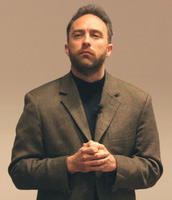
Jimmy Wales visited my class this morning. I learned a lot about the way conflict has been managed on the U.S. version of Wikipedia. One topic of discussion was how the communities of different language versions have developed different methods for mediating conflict. It makes sense, but I hadn’t thought of that. Jimmy admitted to having little direct knowledge of how some languages are managing these issues because he can’t read many of them himself. This is good news when considering the sustainability of the project once he leaves. It was very interesting to hear his thoughts on issues of control and how the Wiki model is very different in this respect from many other models for social software. I definitely need to do some more research into the theory underlying the Wiki model. One funny thing I found out about was the Guerilla UK spelling campaign. Fortunately, I just discovered that their is a counter campaign. Had I known sooner that my nation’s honor (not honour) was at stake, I might have become a more active user!
Month: October 2005
Dr. Mary Beth Oliver’s (Penn. State) visit to my psych. of HCI seminar
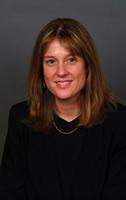
Mary Beth Oliver visited my psychology of HCI today. She spoke on individual differences in media effects research. Her research is largly focused on traditional media like tv as opposed to the internet. Consequently, much of the discussion focused on possible ways to to research the effects of individual differences on internet use.
One of the major things I got out of it is the potential to research how individual differences effect the way people interpret information. The classic example of this is a study done on the tv show All in the Family. Unfortunately, I don’t have the citation with me at the moment. But the idea is that bigoted people interpret Archie Bunker as the hero while other people see open-minded characters as the heros. The example is so great because it is relatively obvious to anyone who has seen the show that this would occur. What effects does this type of phenomenon have on interactive media?
The way people interact with news on the web is one area where one might examine how individual differences effect interaction. Last semester Kelly Garrett spoke at SILS about his dissertation research in this area. Some of the preliminary data he has collected suggests differences between how liberals and conservatives choose whether to read news articles that contradict or support their views.
“Need for cognition” is another personal differences factor that may prove very important in research on information gathering by different populations.
Next week Dr. S. Shyam Sundar, Director of the Media Effects Lab at Penn. State, will be visiting the class.
Working to plan a visit by Leslie Burger, President-Elect of the ALA
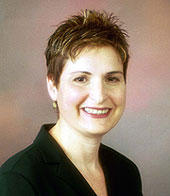
For the past few weeks I have been working with my colleague Stefanie to organize a visit by Leslie Burger. Event planning is not easy. Everything is coming along relatively smoothly I guess. Unless something major changes, Leslie will be speaking at 5:30pm on Monday November 7 in Manning 209. A reception will follow. We are still working out the rest of the details. I will post when I know more.
Jimmy Wales visiting UNC
Founder of Wikipedia, Jimmy Wales, will be speaking about Wikipedia and Wikinews at Manning 209 on Wednesday, October 5, 2005 at 3:30 PM. Unfortunately, I won’t be able to make the talk. Luckily, on Thursday Mr. Wales will be a guest in the Virtual Communities seminar I am taking. Information about the event can be found here:
http://www.ibiblio.org/speakers/wales/
I just don’t see how this law helps anyone
A few days ago, the Chronicle of Higher Education reported on a recent study by the Government Accountability Office which explains that at least 17,000-41,000 past drug offenders have been denied federal educational loan money between 2001 and 2004. Denying college funding to otherwise worthy students for unrelated past offences is wrong. The full report can be found here:
http://www.gao.gov/new.items/d05238.pdf